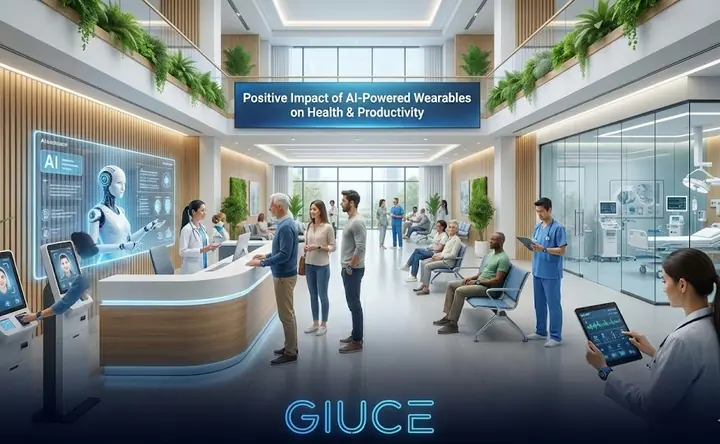


Productive Momentum Driving Intelligent SaaS Workflows reflects how contemporary software-as-a-service systems operationalize intelligence to restructure digital work into coherent, low-friction flows. This transformation is not cosmetic. It is rooted in architectural shifts where adaptive automation, context-aware interfaces, and policy-encoded logic reshape how tasks are initiated, executed, verified, and concluded across organizations.
The keyword Productive Momentum Driving Intelligent SaaS Workflows anchors the discussion at the point where computation aligns with human intent under real operational constraints, a pattern observable across enterprise platforms analyzed by Harvard Business Review.
Productive Momentum Driving Intelligent SaaS Workflows
Intelligent SaaS as workflow infrastructure
Intelligent SaaS platforms function as workflow infrastructure rather than isolated applications. They encode process logic directly into the execution layer, allowing systems to anticipate next actions, validate inputs, and resolve dependencies autonomously. Driving Intelligent SaaS Workflows infrastructure role is documented in enterprise software studies from Gartner, where SaaS platforms absorb coordination tasks previously handled by managers or middleware.
Shift from task execution to flow orchestration
Traditional SaaS optimized task execution. Intelligent SaaS optimizes flow orchestration. By modeling dependencies, priorities, and constraints, platforms coordinate sequences of actions across roles and systems. Research from MIT Sloan shows that flow-oriented systems reduce cognitive switching and error propagation in complex digital environments.
Embedded context awareness
Context awareness enables SaaS platforms to adapt behavior based on user role, historical actions, and environmental signals. This capability relies on continuous state modeling and is reinforced by design patterns discussed in Google Cloud Architecture. Context-aware workflows reduce redundant input and enforce relevance at each interaction point.
Foundations of intelligent workflow design
Declarative process modeling
Declarative models specify desired outcomes rather than procedural steps. Intelligent SaaS platforms translate these models into executable flows, adjusting paths dynamically. Driving Intelligent SaaS Workflows paradigm is central to modern workflow engines described by the Workflow Management Coalition, where adaptability supersedes rigid scripting.
Event-driven architectures
Event-driven designs allow workflows to respond to state changes in real time. SaaS platforms built on event streams react immediately to triggers such as approvals, data updates, or external signals. Architectural analysis from Confluent details how event-driven systems maintain responsiveness at scale.
Policy-encoded constraints
Policies embedded at the platform level enforce compliance, security, and business rules automatically. Intelligent SaaS platforms apply these constraints at runtime, eliminating manual oversight. Driving Intelligent SaaS Workflows approach aligns with governance models outlined by NIST.
Automation that reinforces positive workflows
Adaptive automation
Adaptive automation adjusts behavior based on outcomes and feedback rather than static rules. Intelligent SaaS systems learn which automations accelerate work and which introduce friction. Empirical evidence from McKinsey Digital shows adaptive automation improves throughput without increasing error rates.
Human-in-the-loop alignment
Automation remains bounded by human judgment at critical decision points. Intelligent SaaS platforms formalize these boundaries, routing exceptions and approvals deliberately. This balance is explored in socio-technical research from Stanford HAI, emphasizing controlled autonomy over full automation.
Error prevention and correction
Workflows incorporate validation and correction mechanisms that intercept errors before propagation. SaaS platforms apply schema checks, anomaly detection, and cross-field validation inline. Techniques described by ACM Queue illustrate how early interception stabilizes downstream processes.
Data intelligence shaping workflows
Unified data models
Intelligent SaaS platforms converge operational and analytical data into unified models. This convergence enables workflows to reference current and historical states simultaneously. Industry practices documented by Snowflake demonstrate how unified data reduces reconciliation overhead.
Real-time analytics in execution paths
Analytics execute directly within workflow paths rather than post hoc. Decision points leverage real-time metrics to route tasks or adjust priorities. Driving Intelligent SaaS Workflows integration aligns with streaming analytics approaches detailed by Apache Flink.
Feedback-driven optimization
Workflow performance metrics feed back into system tuning. Bottlenecks, delays, and failure points inform iterative refinement. Continuous optimization frameworks discussed by USENIX highlight how feedback loops improve system resilience.
User experience engineered for flow
Cognitive load minimization
Interfaces present only information required for the current step. Intelligent SaaS platforms suppress irrelevant options and defer complexity. UX research from Nielsen Norman Group confirms reduced cognitive load increases accuracy and speed.
Progressive disclosure
Complex workflows unfold progressively, revealing detail as needed. Driving Intelligent SaaS Workflows design principle supports mastery without overwhelming users. Progressive disclosure patterns are cataloged by Interaction Design Foundation.
Driving Intelligent SaaS Workflows Consistency across contexts
Consistency in interaction patterns across modules stabilizes user behavior. Intelligent SaaS platforms enforce design systems programmatically, reducing variance. Design system governance is detailed by Atlassian Design.
Collaboration embedded in workflows
Asynchronous coordination
Workflows support asynchronous collaboration by capturing state and intent explicitly. Intelligent SaaS platforms allow participants to act independently without losing coherence. Collaboration models from Microsoft Research emphasize state persistence over synchronous interaction.
Role-aware task routing
Tasks route automatically based on role, availability, and expertise. This routing reduces manual delegation and idle time. Workforce optimization studies from Forrester document efficiency gains from role-aware systems.
Shared operational visibility
Dashboards and status indicators provide shared awareness of workflow progress. Visibility reduces redundant communication and escalations. Observability practices described by OpenTelemetry support this transparency.
Driving Intelligent SaaS Workflows Intelligent SaaS in operational domains
Knowledge work orchestration
In knowledge-intensive environments, SaaS workflows coordinate research, review, and synthesis activities. Platforms integrate document intelligence and version control, as described by Notion Engineering. Structured workflows reduce ambiguity without constraining creativity.
Sales and revenue operations
Revenue workflows integrate CRM data, forecasting models, and approval chains. Intelligent SaaS systems align incentives and compliance automatically. Revenue operations frameworks from Salesforce Architecture illustrate this integration.
Software development lifecycles
DevOps-oriented SaaS platforms embed intelligence into build, test, and deployment workflows. Automation responds to code changes and telemetry signals. Practices from GitHub Engineering show how intelligent workflows reduce deployment risk.
Governance and trust in intelligent workflows
Embedded compliance checks
Compliance requirements encode directly into workflows, ensuring adherence by default. Intelligent SaaS platforms apply checks continuously rather than episodically. Regulatory technology discussions from FINRA highlight the effectiveness of embedded controls.
Auditability and traceability
Every workflow action generates an auditable trace linking decision, data, and actor. Driving Intelligent SaaS Workflows traceability supports accountability and forensic analysis. Audit trail architectures are discussed by ISACA.
Access control as workflow logic
Access rights adapt dynamically based on workflow state. Intelligent SaaS platforms enforce least privilege at each step. Zero-trust models from Cloudflare Learning inform this design.
Economic effects of intelligent workflows
Reduction of coordination overhead
By internalizing coordination logic, SaaS platforms reduce meetings, handoffs, and status checks. Organizational efficiency studies from OECD link coordination reduction to productivity gains.
Predictable operational costs
Workflow automation stabilizes operational costs by reducing variance in execution time and error recovery. Cost modeling approaches from AWS Well-Architected align with predictable SaaS workflows.
Scalability without proportional staffing
Intelligent workflows scale throughput without linear increases in headcount. Driving Intelligent SaaS Workflows property is central to SaaS economics analyzed by Bessemer Venture Partners.
Learning systems within SaaS workflows
Continuous behavioral learning
Platforms learn from user interactions to refine defaults and recommendations. This learning focuses on behavior patterns rather than personal attributes. Ethical learning frameworks from Partnership on AI guide responsible implementation.
Workflow pattern generalization
Successful workflow patterns propagate across teams and organizations. Intelligent SaaS systems abstract these patterns into reusable templates. Template-driven productivity is examined by Asana Work Index.
Resistance to degradation
Learning systems detect drift and degradation in workflow performance. Automated alerts trigger recalibration. Reliability engineering principles from Google SRE support sustained performance.
Interoperability and ecosystem alignment
API-first workflow extension
APIs allow workflows to span multiple SaaS platforms without fragmentation. API-first strategies discussed by Stripe Engineering enable composable workflows.
Standardized data exchange
Standard schemas and protocols reduce integration friction. Adoption of standards promoted by the OpenAPI Initiative ensures interoperability across vendors.
Vendor-neutral orchestration
Workflow engines increasingly operate above individual SaaS tools, orchestrating them neutrally. Neutral orchestration reduces lock-in, a concern addressed by CNCF.
Human-system equilibrium
Augmentation over substitution
Intelligent SaaS workflows augment human capability by handling coordination and validation. This equilibrium preserves judgment where required. Augmentation models are analyzed by Oxford Internet Institute.
Skill compression
Workflows encode best practices, reducing reliance on tacit knowledge. Skill compression accelerates onboarding and consistency. Organizational learning research from MIT OpenCourseWare supports this mechanism.
Driving Intelligent SaaS Workflows Reduced burnout vectors
Clear workflows and reduced ambiguity lower cognitive strain. Occupational studies from NIOSH link structured digital work to reduced burnout indicators.
Measurement and continuous calibration
Flow efficiency metrics
Metrics focus on flow efficiency rather than individual task speed. Measuring wait states and rework exposes systemic friction. Lean metrics from Lean Enterprise Institute inform this perspective.
Outcome-aligned KPIs
Workflows align with outcome metrics rather than activity counts. Intelligent SaaS platforms surface outcome signals directly. Performance alignment frameworks from Balanced Scorecard Institute remain relevant.
Real-time observability
Observability tools monitor workflow health continuously. Anomalies trigger automated mitigation. Observability practices from Lightstep integrate with SaaS platforms.
Evolutionary trajectory of intelligent SaaS
Incremental capability accretion
Capabilities accumulate incrementally through configuration and learning rather than disruptive rewrites. This evolutionary path aligns with long-lived SaaS platforms studied by IEEE Software.
Stability under organizational change
Intelligent workflows absorb organizational restructuring without collapse. Role reassignment and policy updates propagate automatically. Change management literature from Prosci highlights this resilience.
Persistent alignment with real work
The defining property remains persistent alignment with how work actually occurs, not how it is documented. Intelligent SaaS platforms maintain this alignment through continuous sensing, adaptation, and enforcement embedded directly in digital workflows.